
What is Chhattisgarh Memory Project?
| Published | 24 March 2026 |
|---|---|
| Written by | Khushal Khodiyar |
| Category | Programmes |
The Chhattisgarh Memory Project is where archival research meets storytelling.
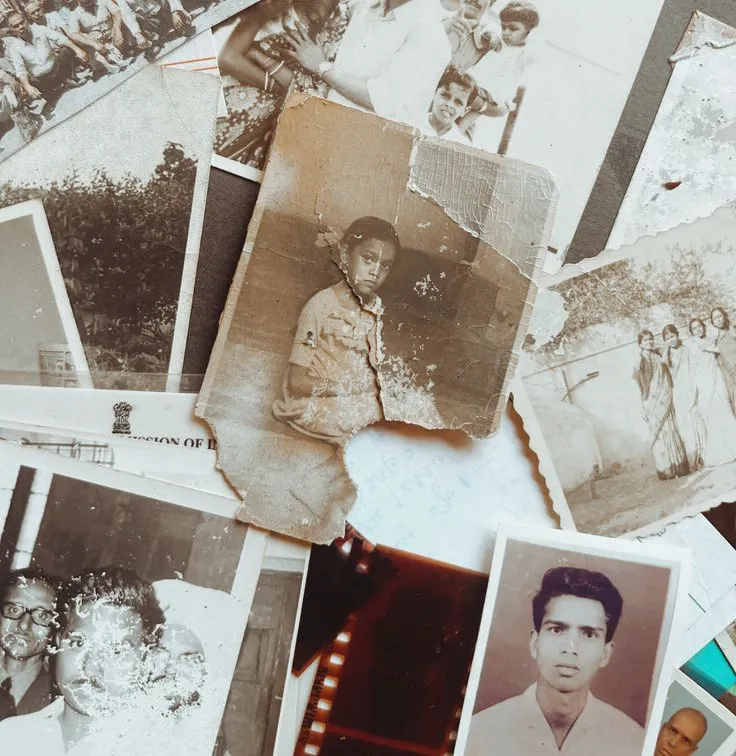
Most archives hold far more than what is visible on the surface of a catalogue entry. A single photograph can carry within it the story of a family’s migration, a town’s transformation, or a tradition on the verge of disappearing. A handwritten letter can illuminate decades of political change in the space of a few lines. An oral history recording, preserved on magnetic tape, might be the last surviving account of a way of life that no longer exists.
The Memory Project is built on the belief that these materials deserve more than a metadata record. Each piece of research, each visual essay, and each narrative we publish is an act of interpretation — an attempt to sit with the archive, ask it questions, and bring its answers forward in language and images that any reader can connect with.
We write for the researcher tracing a historical thread across centuries. We write for the student encountering Chhattisgarh’s history for the first time. And we write for the person who simply wants to understand the place they come from, more deeply than they did before.
What We Publish
The Memory Project publishes three kinds of content, each drawing from the archival collections held by the Chhattisgarh Archival Project:
Long-form Articles — Carefully researched, narrative-driven pieces that explore a single event, person, community, or cultural phenomenon in depth. These are not encyclopaedia entries — they are essays that place archival evidence in its full human context, written for the curious general reader as much as the specialist.
Visual Essays — Stories told primarily through archival photographs, maps, and documents, with editorial text that guides the reader through what they are seeing and why it matters. Visual essays are particularly suited to subjects where the image itself is the evidence — vanished architecture, documented ceremonies, portraits of people and places that no longer exist in the same form.
Research-Based Narratives — Longer, more detailed pieces developed from original archival research, often in collaboration with historians, anthropologists, and community members. These narratives trace the arc of historical change — how a community shifted, how a practice evolved, how a landscape was altered — drawing on primary sources held within our collections.
What We Cover
Chhattisgarh’s history is layered, diverse, and incompletely told. The Memory Project does not attempt to cover everything — it follows the archive. Our editorial focus is shaped by what the collections hold and what the communities they document deserve to have returned to them.
Our narratives span themes including:
- The cultural and spiritual traditions of Chhattisgarh’s tribal and indigenous communities, documented through ceremony, craft, and oral transmission
- The transformation of the land — from forest to farmland, from village to city, from pre-industrial landscape to one reshaped by steel, coal, and infrastructure
- The everyday lives of people and communities rarely centred in mainstream historical accounts
- The built environment — temples, havelis, public buildings, and market towns, many of which survive only in photographs and plans
- Migration, displacement, and the experience of communities caught between worlds
- The cultural life of the region — its music, its festivals, its food traditions, and the ways these have changed across generations
“Behind every entry in our archive is a life fully lived. The Chhattisgarh Memory Project is our attempt to honour that — one story at a time.”
Why Chhattisgarh Memory Project Matters
Archives alone are not enough. A collection only fulfils its purpose when it reaches the people whose history it holds.
For communities whose histories have been systematically underdocumented — whose languages, landscapes, and ways of life were recorded only partially, or not at all — the act of storytelling is also an act of recovery. The Memory Project does not claim to complete that recovery. But it insists on beginning it, and on doing so with care, rigour, and deep respect for the communities whose lives and memories form the foundation of everything we publish.
We are also aware that memory is not neutral. What was recorded, and by whom, shapes what the archive contains. We try to be honest about those gaps — to name what is missing, to acknowledge whose perspective is centred, and to actively seek out the voices and materials that remain on the margins of the historical record.
A Living Project
The Chhattisgarh Memory Project is not a fixed publication. It grows as the archive grows, and as new research, new contributors, and new communities bring their knowledge to it.
We welcome historians, writers, photographers, educators, community elders, and anyone with knowledge of or connection to Chhattisgarh’s history to contribute to the project. Whether you have a story to tell, a collection of photographs to share, or a line of historical enquiry you have been following for years, we would like to hear from you. Please contact us at chhattisgarharchivalproject@gmail.com
Contribute to the Memory Project
To share research, archival material, or an editorial proposal, contact chhattisgarharchivalproject@gmail.com.